Nawrocki proposes “Polish SAFE 0%” as a no-interest option

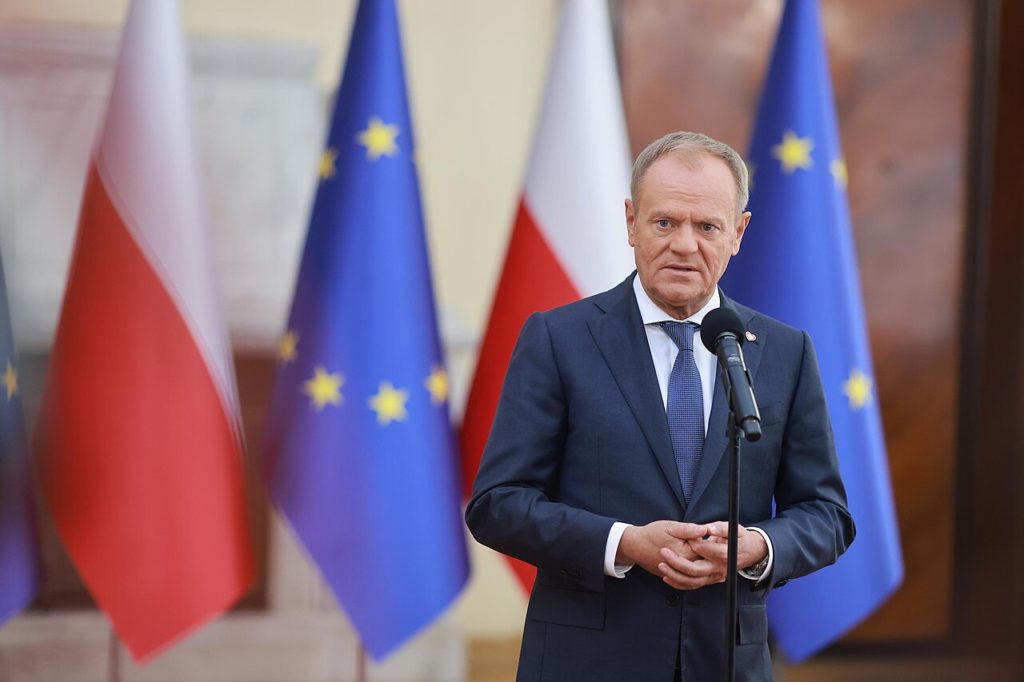
President Karol Nawrocki said on 4 March 2026 that he will decide on the SAFE programme after taking into account concerns raised in public debate. He said the obligations linked to SAFE would be repaid by future generations and added that, in his view, the programme is set to run until 2070. Nawrocki stressed the importance of access to modern military equipment and pointed to contracts with the United States and South Korea as part of building national resilience.

The president appeared at the conference together with NBP governor Adam Glapiński and presented the concept of a “Polish SAFE 0%” scheme. He said it is intended to be an alternative without interest. He said implementing the programme would require the president’s approval, an initiative and approval from the NBP governor, and the government’s involvement. Nawrocki said he would send a letter later the same day to the prime minister and the defence minister inviting them to a meeting on the “Polish SAFE”.

President Karol Nawrocki. Photo: Mateusz Pietras / public domain (Public Domain Mark)

US Senate votes on war powers resolution over Iran operations

The US Senate began voting on 4 March 2026 on a bipartisan war powers resolution aimed at ending US military action against Iran without congressional approval. The measure would require explicit authorisation from Congress for any further action against Iran. One of the main sponsors is Senator Tim Kaine of Virginia, who pointed to Congress’s constitutional role in decisions on war.

The House of Representatives is scheduled to vote on a similar resolution on 5 March. House Speaker Mike Johnson said on 3 March there were enough votes for the measure to be defeated. Johnson made the comment after a closed briefing on the conflict attended by senior administration officials. Even if the resolution passes both chambers, it would need two-thirds majorities in the Senate and the House to survive an expected veto by President Donald Trump.

The votes are taking place as US military operations against Iran enter their fifth day, and US casualties have been reported.

PLD Space raises €180 million for rocket programme

Spanish company PLD Space said on 4 March 2026 it had closed an equity funding round worth €180 million. The company said the round was equivalent to $209 million at current exchange rates. It named Mitsubishi Electric among the investors, alongside Spanish public and development-backed entities supporting innovation. PLD Space said the funds are intended to expand its capability to launch payloads into orbit and to strengthen operational capacity for rocket launches.

The company is developing launch vehicles and infrastructure for satellite launch services. PLD Space did not provide a full spending timetable or dates for key milestones following the round. The funding was announced as Europe moves to strengthen independent capabilities in strategic sectors, including space. Details on the post-round shareholding structure were not made public.

Nine countries possess nuclear weapons worldwide

Nine countries possess nuclear weapons worldwide: the United States, Russia, the United Kingdom, France, China, India, Pakistan, North Korea and Israel. In NATO, nuclear deterrence rests on the Alliance’s strategic forces, primarily those of the United States, as well as the independent strategic forces of the United Kingdom and France. Some NATO members take part in the “nuclear sharing” arrangement under which US B61 nuclear bombs are stationed on their territory. Countries commonly listed as hosting these assets include Belgium, Germany, Italy, the Netherlands and Turkey.

The United States also declares extended deterrence for allies in the Indo-Pacific, including Japan. The US similarly provides extended deterrence to the Republic of Korea, described as a “nuclear umbrella”. Nuclear umbrella deterrence is tied to alliance commitments and planning for scenarios involving the threat of nuclear weapon use. The deployment and role of deterrence assets are set within security policies and allied arrangements.

US submarine sinks Iranian ship IRIS Dena

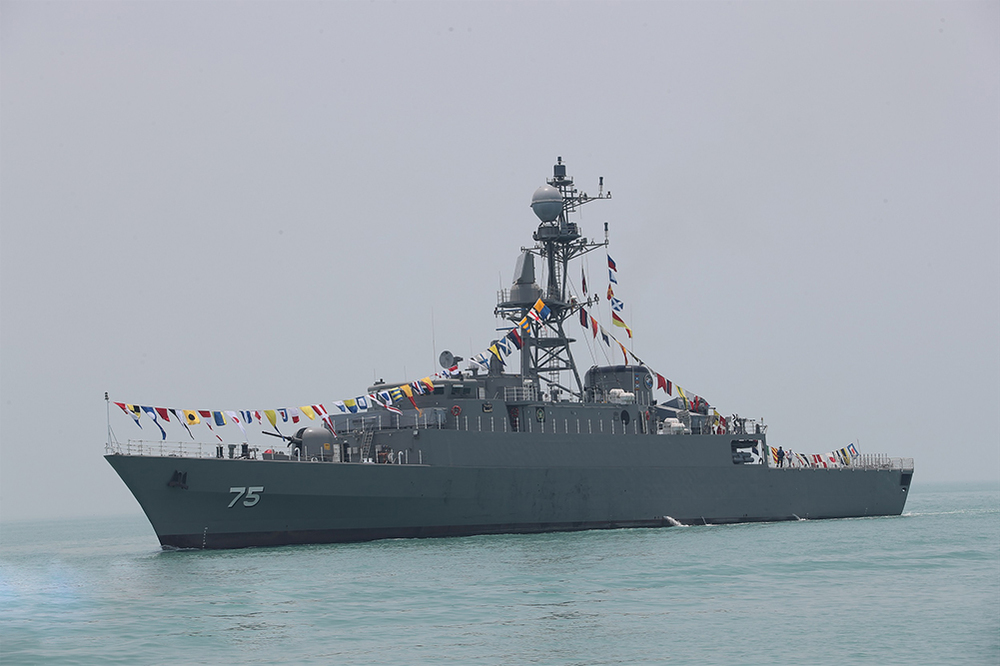
A US submarine sank the Iranian warship IRIS Dena off Sri Lanka’s southern coast. US Defence Secretary Pete Hegseth said on 4 March 2026 the strike was carried out in international waters and involved a torpedo. Sri Lanka’s deputy foreign minister said at least 80 people were killed in the attack.

Sri Lanka’s foreign minister, Vijitha Herath, said 180 people were on board. Sri Lanka launched a search-and-rescue operation after receiving a distress call from the vessel. The Sri Lankan navy rescued 32 people and took them to hospital in the port city of Galle. Sri Lankan authorities said the ship was heading back to Iran from an eastern Indian port. The vessel had earlier taken part in a naval exercise in the Bay of Bengal between 18 and 25 February. Searches for additional survivors are continuing.

Photo: Mohammad Agah / MojNews.com / CC BY 4.0

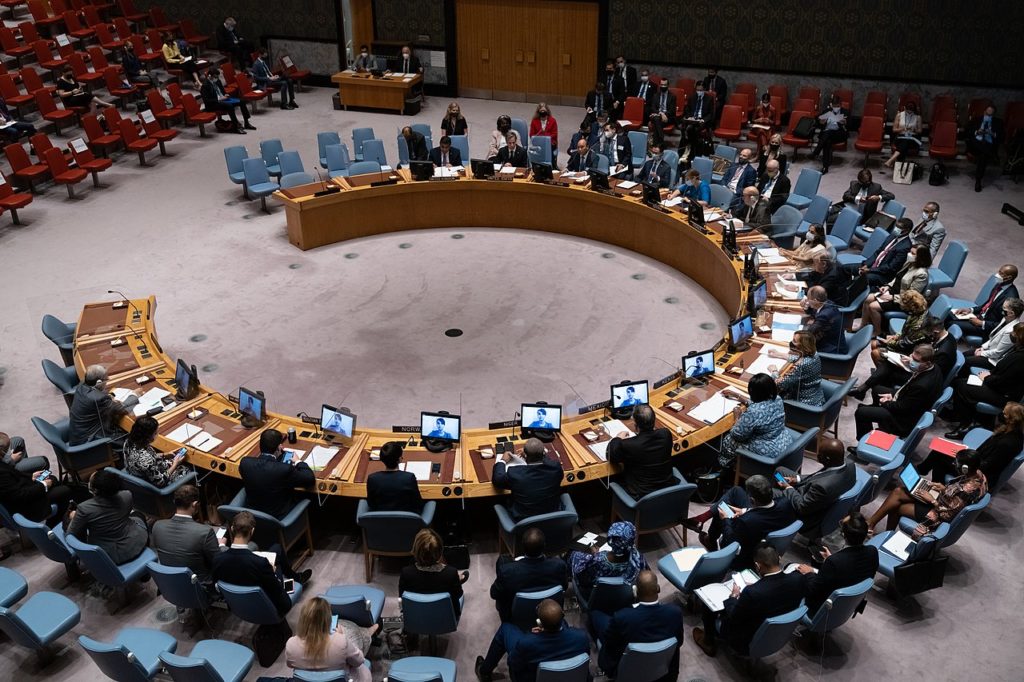
UN Security Council urges Libya to compromise

On 3 March 2026, the UN Security Council issued a statement on Libya urging Libyan stakeholders to engage fully in the political process. The Council reaffirmed support for the UN Special Representative for Libya, Hanna Tetteh, and her roadmap announced on 21 August 2025. It called on parties to participate “fully, seriously and without delay” and to show readiness to compromise. The statement stressed the need for progress towards unifying state institutions, including military and security structures. It highlighted the importance of safeguarding the unity and independence of the judiciary.

The Council underlined the UN’s central role in facilitating a process that is Libyan-led and Libyan-owned. It did not announce new election dates or timelines for the next steps, focusing instead on accelerating political action. Libya remains divided between rival power centres, and the political stalemate continues despite successive mediation initiatives.

Photo: U.S. Department of State (USA)

NATO destroyed Iranian missile heading towards Turkey

Turkey’s defence ministry said on 4 March 2026 that a ballistic missile fired from Iran and heading towards Turkey was destroyed. The ministry said the object was detected after flying through Iraqi and Syrian airspace. It said the missile was intercepted and neutralised by NATO allied air and missile defence assets. The interception took place over the eastern Mediterranean.

The ministry said there were no casualties or injuries. It did not specify the missile’s intended target. Turkey said it reserves the right to respond to hostile actions directed at its territory. Ankara called on parties to refrain from steps that could lead to further escalation in the region.

Rodrygo tears cruciate ligament in right knee

Real Madrid and Brazil forward Rodrygo Goes has suffered an anterior cruciate ligament tear and damage to the lateral meniscus in his right knee. The club announced the diagnosis on 3 March 2026 after tests carried out by its medical staff. The injury occurred during a Spanish league match against Getafe. Rodrygo came on as a substitute in the 54th minute.

The injury happened in the 66th minute during an attacking move down the wing. The player finished the match despite pain. Real Madrid said he will not play again until the end of the season. The injury rules Rodrygo out of the 2026 World Cup in Canada, the United States and Mexico.

Prime Minister urges Poles to refrain from travelling to the Middle East

Prime Minister Donald Tusk appealed on 4 March 2026 to Poles to refrain, where possible, from travelling to the Middle East. He said that people who decide to travel to countries in the region today may tomorrow expect assistance from the Polish state with evacuation. He stressed that he is repeating the appeal to everyone planning trips, including for tourism. He noted that as security deteriorates, organising evacuations becomes more difficult. He said decisions to travel to the region can quickly turn into the need to arrange consular support and return transport.

The prime minister’s appeal came as Polish services were carrying out measures linked to the departure of some citizens from areas affected by tensions. The government said it is monitoring the security situation in the region and coordinating actions through diplomatic missions. The prime minister called for travel to be limited until the situation in the region stabilises.

Photo: The Chancellery of the Prime Minister of the Republic of Poland

Putin to meet Szijjártó over Druzhba oil supplies

The Kremlin said on 4 March 2026 that Russian President Vladimir Putin will meet Hungarian Foreign Minister Péter Szijjártó. The talks are set to cover disruptions to oil deliveries through the Druzhba pipeline to Hungary and Slovakia. Russia described Ukraine’s actions as “blackmail” of regional states over transit. Ukraine said the pipeline was severely damaged in January by a Russian attack and cannot be repaired quickly. Hungary and Slovakia, in turn, accused Ukraine of deliberately delaying repairs for political reasons.

Kremlin spokesman Dmitry Peskov said Druzhba will be one of the key topics of the meeting. No details were provided on when full flows might be restored. The dispute remains part of broader tensions over some EU states continuing to import Russian oil.