US and Israeli air strikes kill Iranian commanders

The United States and Israel carried out air strikes on targets in Iran on 28 February 2026. On 1 March 2026, Iranian state media reported that Iran’s Supreme Leader, Ayatollah Ali Khamenei, was killed in the attacks. US President Donald Trump confirmed Ali Khamenei’s death.

Israel said that senior figures from Iran’s military command and security services were also killed in the strikes. Among the dead, Israel named Mohammad Pakpour, commander of the Islamic Revolutionary Guard Corps; Abdolrahim Mousawi, chief of staff of Iran’s armed forces; Aziz Nasirzadeh, Iran’s defence minister; and Ali Shamkhani, secretary of Iran’s Supreme National Security Council.

Iran considering withdrawal from World Cup in USA

The Iranian national team is considering withdrawal from the FIFA World Cup 2026 to be held in the United States, Canada, and Mexico. The decision is linked to the escalation of conflict in the Middle East and recent bombings of Iran by the United States and Israel.

Iran is in Group G alongside New Zealand, Belgium, and Egypt. Iran’s matches are scheduled for June 15, 21, and 26 in Los Angeles and Seattle. Iranian fans face visa restrictions entering the USA. Organizers of the World Cup and FIFA have not yet commented on the situation. The tournament will run from June 11 to July 19, 2026.

Oil and precious metals rise after strikes on Iran

On Monday, 2 March 2026, commodity markets recorded price gains after weekend military strikes by the United States and Israel on Iranian territory.
At 08:25 UTC, Brent crude was trading at $80.17 per barrel, WTI at $73.22 per barrel, spot gold at $5,405 per ounce, and spot silver at $95.60 per ounce.

Trading took place amid shipping disruptions in the Persian Gulf region. The Strait of Hormuz remains a key route for oil exports from the region. The price moves emerged in the first hours of European trading following the weekend events.

US and Israel strike Iran, retaliation hits region

On 28 February, the armed forces of the United States and Israel carried out coordinated strikes on targets in several Iranian cities, including Tehran, Isfahan, Qom and Kermanshah. Iranian state media also reported explosions in Karaj and in Hormozgan province, including the city of Minab. According to local authorities, some of the attacks caused civilian casualties and damage to infrastructure.

In response, Iran launched missile and drone strikes beyond its territory. Explosions were reported in Dubai and Abu Dhabi in the United Arab Emirates, as well as in Doha in Qatar. Explosions were also reported in Manama in Bahrain and in Kuwait.

In Israel, air raid sirens were activated, schools were closed and restrictions on public gatherings were introduced. Several countries in the region temporarily closed their airspace, leading to flight cancellations and diversions.

Israel and US Conduct Strikes on Iran

On 28 February, the armed forces of Israel and the United States carried out coordinated strikes on targets in Iran, including in Tehran. Iranian state media reported explosions in several cities. The Israeli side described the action as a pre-emptive strike against targets linked to Iran’s missile and nuclear programme.

US authorities confirmed the launch of a military operation against selected facilities in Iran. US President Donald Trump stated that the operation aims to protect the security of the United States. Israeli Prime Minister Benjamin Netanyahu said the actions are directed at specific facilities on Iranian territory.

Iranian authorities announced that retaliatory measures would be taken against Israel and US forces in the region, without providing details. A state of emergency was declared in Israel and part of the air traffic was suspended. Iran closed its airspace and introduced security restrictions in selected regions of the country.

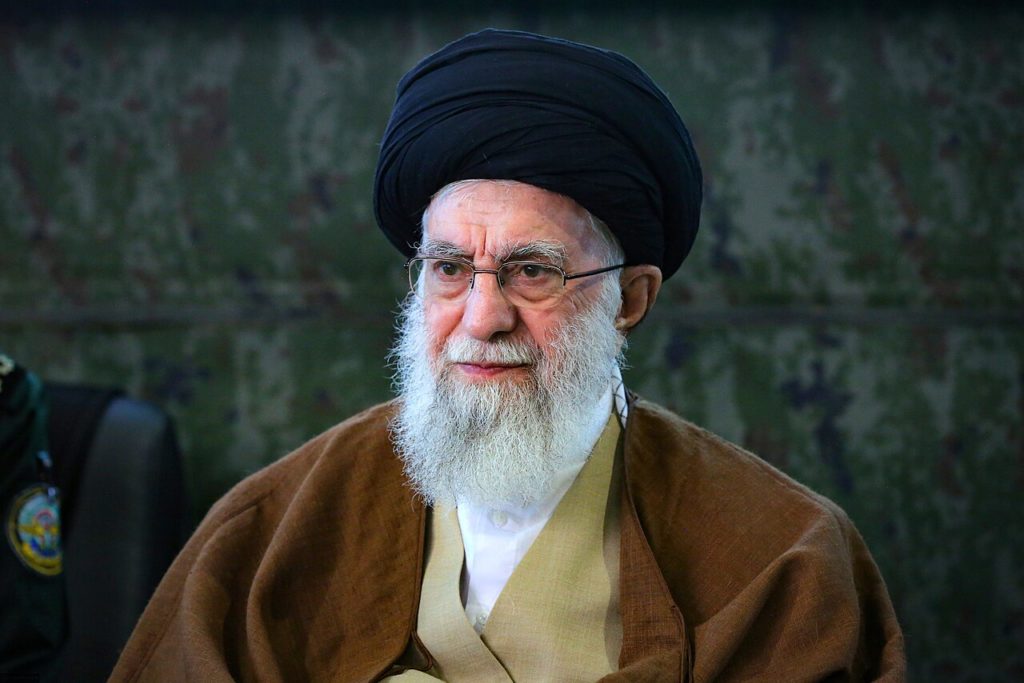
Ali Khamenei, Supreme Leader of Iran. Photo: khamenei.ir / CC BY 4.0

Trump delivers record-long State of the Union Address

President Donald Trump delivered the annual State of the Union Address on 24 February 2026 before a joint session of the United States Congress in Washington. The speech began at 9:12 p.m. local time and lasted 1 hour and 48 minutes. It was the first State of the Union of his second term, which began on 20 January 2025. The duration made it the longest annual State of the Union Address in U.S. history.

In his remarks, the president addressed the economic situation, tax policy and measures related to border security. He announced legislative initiatives concerning immigration and changes to the electoral system. In the section devoted to foreign policy, he referred to defence spending and the international relations of the United States. Following the address, the official Democratic response was delivered by the Minority Leader in the House of Representatives. The response referred to the legislative proposals outlined in the speech.

Four years since the start of Russia’s full-scale invasion of Ukraine

24 February 2026 marks four years since the start of the full-scale invasion of Ukraine by Russia. The attack began on 24 February 2022 with missile strikes across the country and ground assaults from the north, east and south. Fighting is currently concentrated mainly in eastern Ukraine, including the Donetsk and Luhansk regions. Parts of the Zaporizhzhia and Kherson regions remain under Russian control.

According to the United Nations Office of the High Commissioner for Human Rights, more than 10,000 civilian deaths have been confirmed since February 2022. The United Nations High Commissioner for Refugees reports that millions of people have fled the country and millions more remain internally displaced. Ukraine continues to operate under martial law and maintains nationwide mobilisation. Western states continue to provide military and financial assistance to Kyiv, and sanctions against Russia remain in place. Hostilities and aerial attacks are still being reported along the front line and in other areas of Ukraine.

Milan Fashion Week: 56 runway shows scheduled for FW 2026/27

Milan Fashion Week has opened with presentations of women’s collections for the Fall/Winter 2026/2027 season. The event runs from 24 February to 2 March 2026. The official calendar includes 56 runway shows along with dozens of presentations and related events. It is organised by the Camera Nazionale della Moda Italiana. The schedule features shows by fashion houses including Gucci, Prada, Dolce & Gabbana, Versace and Giorgio Armani.

Presentations are being held at multiple venues across Milan, including historic buildings and modern exhibition spaces. In addition to runway shows, closed presentations for buyers and industry meetings are planned. Milan is one of the four main cities in the global fashion calendar, alongside New York, London and Paris.

Roberto Cavalli – fashion show. Photo: Christopher Macsurak / Wikimedia Commons (CC BY 2.0)

Tesla shifts part of Fremont plant to Optimus production

Tesla announced it will convert part of its Fremont, California facility from electric vehicle manufacturing to the production of its humanoid robot, Optimus. The company said production of the Model S and Model X will end in the second quarter of 2026. The freed production space is to be repurposed for manufacturing robots developed by Tesla’s robotics and artificial intelligence division.

Optimus is a bipedal humanoid robot equipped with vision systems and software based on Tesla’s AI technologies. The project was first introduced in 2021 as a platform intended to perform repetitive and potentially hazardous tasks. Tesla has stated that a new generation of the robot is being developed with serial production in mind. Planned capacity in the converted section of the plant is expected to reach hundreds of thousands of units annually. The company has not disclosed a detailed timeline for the full launch of the new production line.

Tesla Optimus Humanoid Robot. Fot. Steve Jurvetson / Wikimedia Commons (CC BY 2.0)

Bepirovirsen met primary endpoints in Phase III HBV trials

GSK reported results from two Phase III clinical trials, B-Well 1 and B-Well 2, evaluating bepirovirsen in people with chronic hepatitis B virus infection. The primary endpoint was met in both studies. The trials enrolled more than 1,800 participants across 29 countries. Bepirovirsen is an investigational antisense oligonucleotide administered for a defined treatment period in combination with standard therapy. The primary endpoint was defined as loss of hepatitis B surface antigen (HBsAg) and sustained undetectable HBV DNA after completion of treatment.

The company said it plans to submit regulatory applications in selected markets from the first quarter of 2026. Detailed data are expected to be presented at an upcoming scientific congress. Chronic HBV infection remains a major cause of liver disease worldwide.