
Prices of Brent and WTI crude oil rose on Monday to their highest levels since mid-2022. In morning trading, both Brent and WTI were above 114 dollars per barrel. Later in the day, the price of Brent approached 119.50 dollars. The increase was linked to concerns about possible disruptions to oil supplies from the Middle East following the escalation of the conflict involving Iran. Markets also reacted to the risk of disruptions around the Strait of Hormuz, a key route for global oil shipments. The scale of Monday’s movement was described as one of the strongest single-day increases in recent years. Current prices remain below the historical peaks recorded in 2008. The record price of Brent stands at 147.50 dollars per barrel, while WTI also exceeded 147 dollars at that time. The latest rise therefore marks very high oil prices, but not an all-time record.
ECONOMY
Fuel prices at filling stations in Poland are rising in early March
In a publicly available sample of price readings from Polish filling stations collected between 5 and 8 March, the average price of Pb95 petrol was PLN 6.33 per litre, diesel PLN 7.17 per litre, and LPG PLN 3.01 per litre. The figures covered readings from six fuel networks, including Orlen, BP, Shell, Auchan and Circle K. The highest recorded prices reached PLN 7.00 per litre for Pb95, PLN 7.59 per litre for diesel and PLN 3.22 per litre for LPG. The lowest were PLN 5.55, PLN 5.74 and PLN 2.70 per litre respectively. The data show considerable price differences between stations and locations.
Currency and precious metal rates (2026-03-08 06:00 UTC)
Currency rates (2026-03-08 06:00 UTC)
1 EUR = 4.2707 PLN
1 USD = 3.6755 PLN
1 CHF = 4.7304 PLN
1 GBP = 4.9291 PLN
1 EUR = 1.1620 USD
Precious metals (2026-03-08 06:00 UTC)
GOLD = 5174.00 USD/oz
SILVER = 84.59 USD/oz
—
Data: foreign exchange – interbank FX market, metals – XAU/USD and XAG/USD spot (OTC). Values represent a market snapshot at the time of publication and do not constitute investment advice.
CSIS: Iran war costs the U.S. $891 million a day
The Center for Strategic and International Studies estimated that the first 100 hours of the U.S. operation against Iran cost $3.7 billion. The analysis said this is equivalent to an average of $891.4 million per day. CSIS said less than $200 million of that amount consists of operating costs covered by the Defence Department’s current budget. The remainder was said to stem in part from heavy use of weapons and the need to replenish them. The analysis said most of those costs are not included in the budget and may require additional Pentagon funding. The authors of the estimate did not cite official U.S. government figures on the total cost of the operation at this stage. The report noted that further costs will depend on the intensity of the action and the duration of the operation. CSIS did not provide a forecast of the war’s overall cost.
Oil prices fall after signals of possible U.S. intervention
On 6 March 2026, oil prices fell after earlier gains. The drop followed reports that the U.S. government is considering possible intervention in the futures market to ease price pressure. The United States was also reported to have issued waivers allowing Indian refiners to buy Russian oil. At 02:51 GMT, Brent crude was down $1.14, or 1.33%, at $84.27 a barrel. U.S. West Texas Intermediate was down $1.46, or 1.8%, at $79.55 a barrel. The reports said U.S. measures are intended to ease supply constraints stemming from the war in the Middle East. The information provided did not specify what tools the U.S. administration is considering or when any decision might be taken.
China to unveil 2026–2030 technology plan
China is expected to present the outlines of the next stage of its technology strategy this week during the annual session of the National People’s Congress. The announcements relate to publishing the direction of the 15th five-year plan for 2026–2030. The priorities are expected to include artificial intelligence, humanoid robotics and space technologies. The plan is expected to include measures to move demonstrations and prototypes into industrial-scale deployment and to increase capital investment. The agenda also includes integrating AI into industrial production, including initiatives described as “AI-plus manufacturing”.
The announcements come amid ongoing technology competition with Western countries and export restrictions affecting some technologies. In the background, a China–US leaders’ summit is expected in late March, where issues including supply chains and export controls are set to be discussed. Final numerical targets and specific financing instruments for the new programmes have not yet been provided. Details are expected to be presented through documents and speeches during the meetings in Beijing.
Aluminium prices jump after Gulf supply disruption
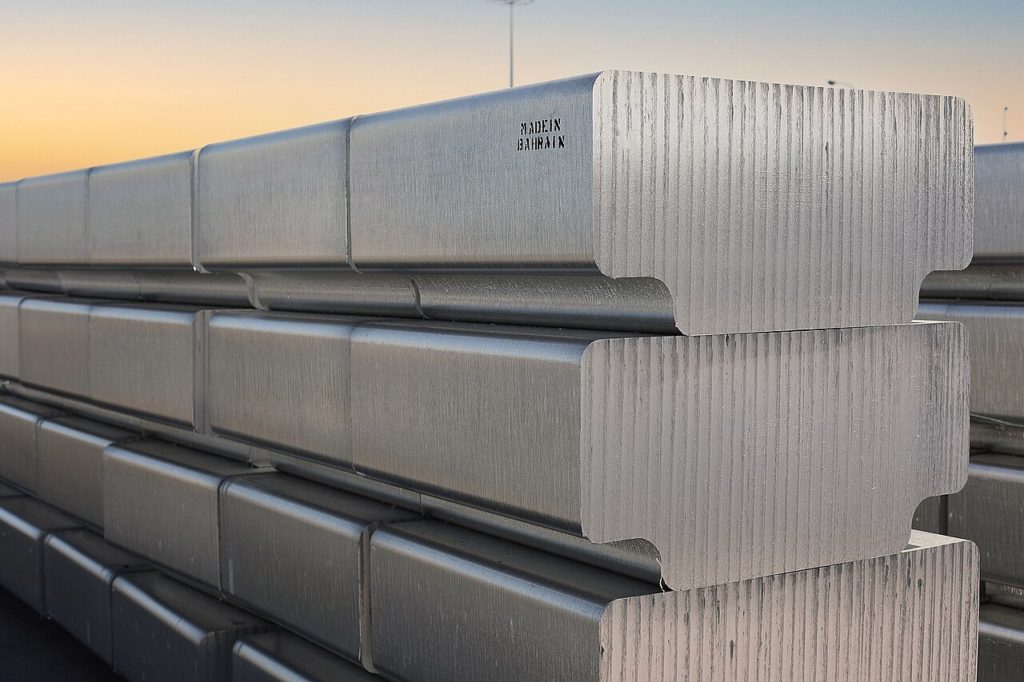
Aluminium prices on the London Metal Exchange rose by more than 5% on 4 March 2026 to $3,418 a tonne, the highest level since April 2022. Aluminium Bahrain (Alba) said it had halted shipments of the metal to some customers and declared force majeure on supply contracts. The company said the disruption relates to logistics and shipping in the Strait of Hormuz area, while the plant remains operational. Norsk Hydro said its joint venture in Qatar, Qatalum, is starting to shut down installations, and a full restart could take between six and 12 months.
The Middle East accounts for about 8% of global aluminium supply, and a significant share of exports and raw-material deliveries to smelters passes along routes linked to the Strait of Hormuz. Aluminium premiums in Europe also increased, with the Rotterdam premium reaching $436 a tonne, the highest level in about 3.5 years. In the US, the aluminium premium rose to a record $1.075 per pound.
Estimates indicate that more than 5 million tonnes of aluminium pass through the Strait of Hormuz each year, increasing the impact of disruption on the metal’s availability. Companies in the region said they are seeking alternative transport solutions to fulfil deliveries.
Bechtel signs contract with Doraco for Polish nuclear project
Bechtel has signed a contract with Gdańsk-based company Doraco for Poland’s first nuclear power plant. The agreement covers construction works and support services needed for the second and third stages of geological and geotechnical surveys. Doraco is to prepare site facilities and on-site infrastructure to enable the surveys to be carried out. The contract was announced on 4 March 2026 in Gdańsk during the “Atomowe Szanse” conference. The project’s investor is Polskie Elektrownie Jądrowe.
The plant is planned in Pomerania, in the Choczewo commune, at the Lubiatowo–Kopalino site. The second stage of surveys is due to start in May and includes around 1,000 survey points. As part of the preparations, Doraco is to build, among other things, 13 drilling platforms, temporary access roads and supporting infrastructure.
RPP cuts NBP reference rate to 3.75%
On 4 March 2026, the Monetary Policy Council cut the NBP reference rate by 0.25 percentage points to 3.75%. The resolution on the level of interest rates entered into force on 5 March 2026. According to preliminary data from Statistics Poland (GUS), CPI inflation in January 2026 fell to 2.2% year on year from 2.4% in December 2025. According to GUS’s flash estimate, Poland’s GDP growth was 4.0% year on year in the fourth quarter of 2025 versus 3.8% in the third quarter of 2025.
The post-meeting information said the annual GDP growth rate was supported by higher domestic demand, including consumption and investment, with a slightly negative contribution from net exports. In January 2026, retail sales increased year on year, while industrial output and construction and assembly output declined.
The MPC noted that the annual growth rate of wages in the enterprise sector in January was markedly lower than in the previous month. This was accompanied by a further decline in employment in the enterprise sector. The MPC said that further decisions will depend on incoming information on the outlook for inflation and economic activity.
PLD Space raises €180 million for rocket programme
Spanish company PLD Space said on 4 March 2026 it had closed an equity funding round worth €180 million. The company said the round was equivalent to $209 million at current exchange rates. It named Mitsubishi Electric among the investors, alongside Spanish public and development-backed entities supporting innovation. PLD Space said the funds are intended to expand its capability to launch payloads into orbit and to strengthen operational capacity for rocket launches.
The company is developing launch vehicles and infrastructure for satellite launch services. PLD Space did not provide a full spending timetable or dates for key milestones following the round. The funding was announced as Europe moves to strengthen independent capabilities in strategic sectors, including space. Details on the post-round shareholding structure were not made public.