
NASA ruled out an impact between asteroid 2024 YR4 and the Moon

NASA said that asteroid 2024 YR4 will not hit the Moon in December 2032. The decision was based on new observations made by the James Webb Space Telescope on 18 and 26 February. The data made it possible to refine the object’s orbit and remove the earlier uncertainty over its trajectory.

Earlier analyses indicated that the probability of a collision with the Moon was 4.3 per cent. NASA said that the asteroid will pass the Moon on 22 December 2032 at a distance of about 21,200 km. The agency recalled that the significant risk of a collision between 2024 YR4 and Earth had also been ruled out earlier.

The object belongs to the group of near-Earth bodies and remains under monitoring as part of planetary defence efforts. The new data ruled out the scenario of a collision with the Moon considered in earlier analyses.

NASA publishes photo from total lunar eclipse

NASA published a photograph on 4 March 2026 taken during the total lunar eclipse on 3 March 2026. The image shows the Moon partially covered by Earth’s shadow above a ridge near Knolls, Utah. NASA said the shot was captured as the Moon was exiting the umbra, the darkest part of Earth’s shadow. The photo is credited to Bill Dunford and was released by NASA. The publication is part of NASA’s educational materials on eclipses and skywatching.

NASA notes that total lunar eclipses occur when the Moon passes through Earth’s shadow and the lunar disc can take on a reddish colour. The material includes an observing description and links to additional eclipse resources. The photo documents the event as seen on 3 March, depending on time zones and viewing location.

Total lunar eclipse, New Orleans, Louisiana, 3 March 2026. Photo: Eric Bordelon / NASA (MAF)

Capsule-based gut microbiota therapy targeted at C. difficile

Human Biome S.A. and Wrocław University of Environmental and Life Sciences are running a project to develop an oral FMT therapy in the form of an ecobiotic containing concentrated and preserved human gut microbiota together with an extracellular matrix. The project is being carried out under the European Funds for a Modern Economy programme. The aim is to prepare a product intended to treat Clostridioides difficile infections.

The work plan includes standardising the microbiota production process through to preservation and developing methods to assess viability and biodiversity using microbiological, molecular and cytometric techniques. The project includes comparing four preservation methods and selecting the most suitable one. It also includes developing an encapsulation process intended to protect microorganisms from oxygen and enable effective release in the large intestine.

The plan assumes efficacy testing in an animal model, including a comparison of the encapsulated product with a reference frozen preparation. The project documentation sets outcome requirements, including storage at around 5°C for at least six months without freezing and a minimum bacterial viability level of 45%.

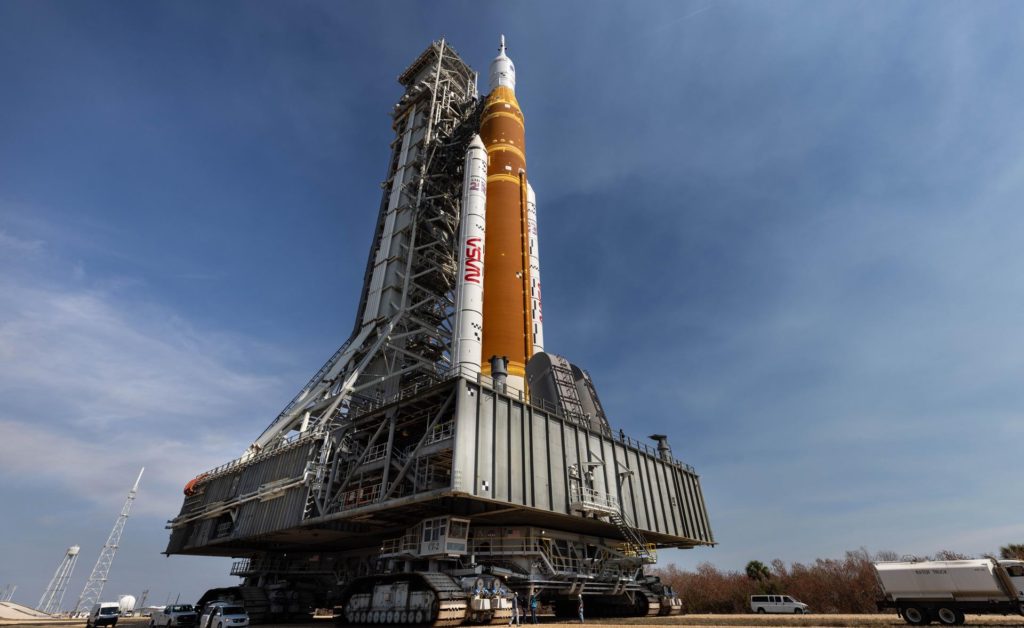
NASA updates Artemis plan and adds a 2027 mission

On 27 February 2026, NASA announced an update to the Artemis programme architecture and the addition of an extra mission in 2027. The agency said the plan includes standardising the configuration of the SLS rocket and the Orion spacecraft for upcoming flights. NASA said Artemis III is scheduled for 2027 and will include testing of systems and procedures in low Earth orbit ahead of a lunar landing under Artemis IV in 2028.

NASA indicated that Artemis III is to include rendezvous and docking manoeuvres with one or two commercial landers being developed by SpaceX and Blue Origin. The agency announced integrated tests of systems including life support, communications and propulsion using the combined vehicles. NASA also said it plans to test xEVA spacesuits as part of the updated Artemis III mission. NASA said detailed objectives for the revised Artemis III will be presented later following reviews with industry partners.

NASA said that on 25 February 2026 the SLS rocket and Orion for Artemis II were rolled back from the launch pad to the Vehicle Assembly Building to address a helium flow issue to the upper stage and to carry out additional technical work. NASA said the updated plan aims for at least one lunar landing in each subsequent year after the first landing under the new mission sequence.

Photo: Cory S. Huston / NASA

Bepirovirsen met primary endpoints in Phase III HBV trials

GSK reported results from two Phase III clinical trials, B-Well 1 and B-Well 2, evaluating bepirovirsen in people with chronic hepatitis B virus infection. The primary endpoint was met in both studies. The trials enrolled more than 1,800 participants across 29 countries. Bepirovirsen is an investigational antisense oligonucleotide administered for a defined treatment period in combination with standard therapy. The primary endpoint was defined as loss of hepatitis B surface antigen (HBsAg) and sustained undetectable HBV DNA after completion of treatment.

The company said it plans to submit regulatory applications in selected markets from the first quarter of 2026. Detailed data are expected to be presented at an upcoming scientific congress. Chronic HBV infection remains a major cause of liver disease worldwide.

Mechanism of VITT identified in international study

Researchers from several universities have published findings on the mechanism behind the rare syndrome of vaccine-induced immune thrombocytopenia and thrombosis (VITT). The study was published on 12 February 2026 in The New England Journal of Medicine. The analysis covered documented cases of VITT observed after exposure to adenovirus-based vaccines and after natural adenovirus infection. The researchers found that the condition is associated with an immune response initially directed against the adenoviral protein pVII.

In rare cases, a specific somatic mutation in antibody genes caused the antibodies to bind to platelet factor 4 (PF4) instead of the viral antigen. This reactivity to PF4 leads to platelet activation and the formation of blood clots. The identified mutation was present in all analysed antibodies obtained from patients with VITT. Reverting the mutation to its original form removed the ability to induce clot formation.

The findings provide a molecular explanation for how a normal immune response to adenovirus can, in rare cases, shift towards autoimmunity targeting PF4.

NASA lunar spacesuit completes readiness testing phase

NASA has completed a key testing milestone for the lunar spacesuit intended for use in the Artemis programme. The tests were conducted in the United States under conditions simulating the lunar surface environment. The trials assessed mobility, life support systems and material resistance to lunar dust. The suit is designed to enable astronauts to conduct extravehicular activities during future crewed Moon missions.

The project is being carried out in partnership with a commercial provider selected by the agency. Completion of this phase is required before the system proceeds to further certification tests. NASA plans to use the suit during the Artemis III mission, which aims to land humans on the Moon. Upcoming testing will include integration of the suit with other mission systems.

NASA lunar spacesuit test. Photo: NASA