Samsung and Vodafone validate vRAN call on Intel Xeon 6

Samsung and Vodafone said on 3 March 2026 they completed validation of a radio access network call using virtualised RAN. The companies said they made the first call using Samsung’s vRAN running on an Intel Xeon 6 SoC platform. The test was carried out in Europe as part of work on cloud-native network architecture and Open RAN. The statement said the project builds on Vodafone’s ongoing Open RAN rollout in Germany. The companies said the validation is intended to support the development of more highly automated networks, including functions linked to the use of AI.

They did not disclose throughput figures or comparative results against existing hardware platforms. No commercial deployment timetable was announced as a direct outcome of the test. The companies said further work will cover additional software development and integration of network components. The statement did not include contract values or the scale of any future hardware purchases.
Złoty: NBP rates and market quotes after Middle East escalation

On 4 March 2026, the National Bank of Poland published its mid-market reference table, setting the euro at 4.2685 zlotys and the US dollar at 3.6770 zlotys. In the same table, sterling was set at 4.9125 zlotys and the Swiss franc at 4.6935 zlotys. On the foreign-exchange market at 12:44 CET (11:44 UTC), EUR/PLN was quoted at 4.26594 and USD/PLN at 3.66616. In the same snapshot, EUR/USD was quoted at 1.16360.

Market moves were being watched on a day when the conflict escalation in the Middle East involving the United States, Israel and Iran remained in focus. Alongside tensions in the region, commodity prices remained elevated, and at 12:44 CET (11:44 UTC) WTI crude was quoted at $74.93 per barrel. The NBP rates apply for the publication date of 4 March 2026, while market quotes change in real time.

Russia calls French nuclear plan destabilising

Russia said on 4 March 2026 that France’s plan to expand its nuclear arsenal is destabilising and poses a potential threat to Moscow. The statement followed remarks by President Emmanuel Macron about strengthening France’s nuclear capabilities. Macron said European allies could take part in exercises related to France’s nuclear deterrent. France and Germany set up a steering group to discuss deterrence issues.

Russia’s foreign ministry said the direction of Paris’s moves could extend the nuclear dimension of deterrence in Europe. The Kremlin said French and British nuclear forces should be taken into account in any future talks on strategic balance. Russia said it is ready for such talks after the New START treaty expires. France did not announce changes to its rules governing the use of nuclear weapons, referring instead to developing deterrence.

Explosions in Tehran and alerts near Jerusalem

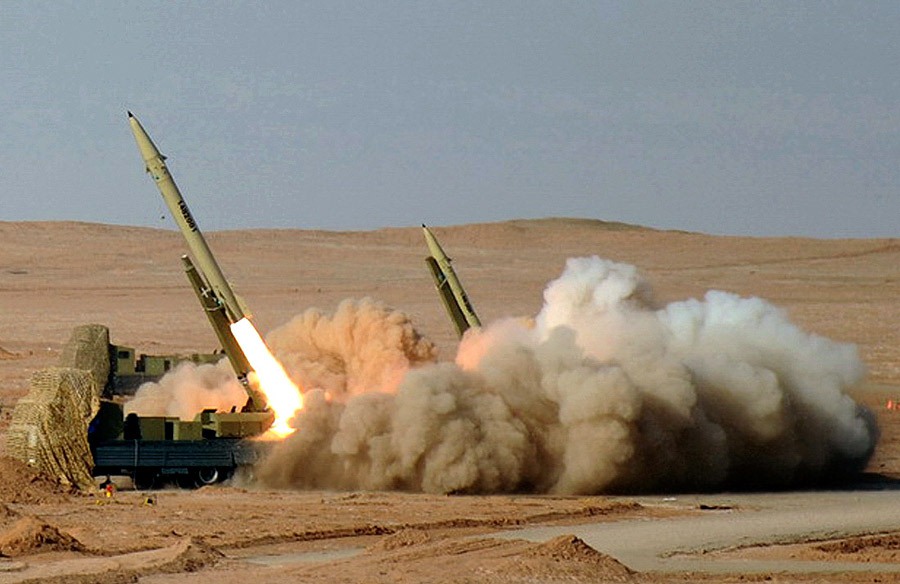
On Wednesday, 4 March 2026, explosions were reported in Tehran as the conflict involving Iran, the United States and Israel entered its fifth day. The Israeli military said it carried out a series of strikes on targets in the Iranian capital, citing sites linked to the Basij and internal security structures. Iran launched another salvo of ballistic missiles towards Israel, and Israeli air defences were activated.

Explosions were heard near Jerusalem as incoming missiles were intercepted. Israeli authorities said most of the incoming rockets were intercepted. Officials said that after four days of fighting, almost 800 people had been killed in Iran, 50 in Lebanon and 11 in Israel.

The Pentagon said six US soldiers were killed in a drone attack in Kuwait and identified four of them. Iranian state television reported that the mourning ceremony for Ali Khamenei was postponed due to intense strikes on Tehran.

Photo: Hossein Velayati / CC BY 4.0

Currency and precious metal rates (2026-03-04 11:00 UTC)

Currency rates (2026-03-04 11:00 UTC)
1 EUR = 4.2638 PLN
1 USD = 3.6647 PLN
1 CHF = 4.6909 PLN
1 GBP = 4.9021 PLN
1 EUR = 1.1635 USD

Precious metals (2026-03-04 11:00 UTC)
GOLD = 5192.90 USD/oz
SILVER = 86.13 USD/oz


Data: foreign exchange – interbank FX market, metals – XAU/USD and XAG/USD spot (OTC). Values represent a market snapshot at the time of publication and do not constitute investment advice.

F1 2026 season begins in Australia with 22 drivers

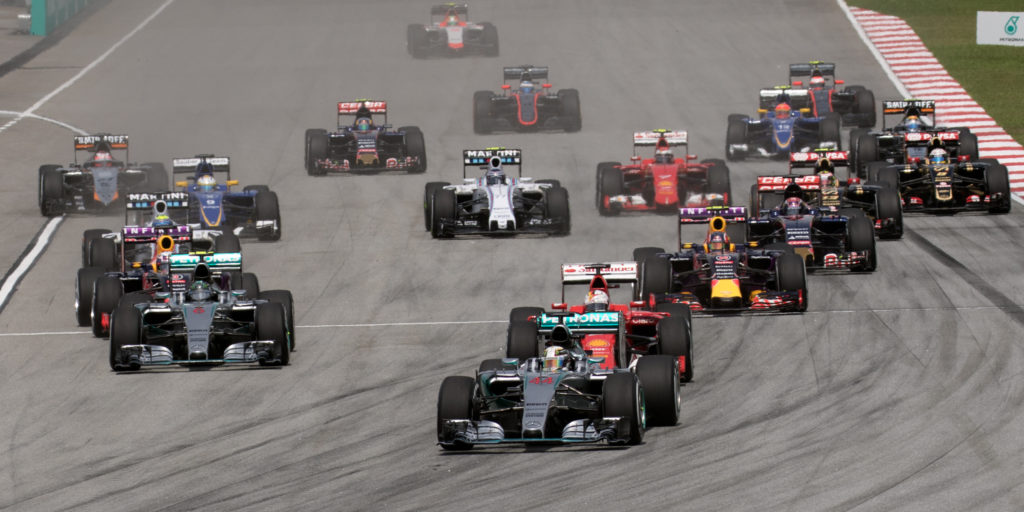
The 2026 Formula 1 season will begin on the weekend of 6–8 March with the Australian Grand Prix at Albert Park in Melbourne. A total of 22 drivers will line up on the grid, as the field expands to 11 teams. Cadillac joins the championship as a new team, marking the first new entry to Formula 1 since Haas debuted in 2016.

The 2026 season opens a new technical era with simultaneous regulation changes covering both the cars and the power units. The rules include a new car concept and revised hybrid power unit requirements, including a greater share of electric power and fuel specified as fully sustainable.

The season calendar is set to feature 24 rounds, with the next race after Australia scheduled to be the Chinese Grand Prix on the weekend of 13–15 March. Teams completed their winter preparations and pre-season testing in Bahrain in February. The first practice sessions in Melbourne will open the on-track fight for the drivers’ and constructors’ titles under the new, expanded grid.

Photo: Morio / CC BY-SA 4.0

Russia condemns strikes on Iran and issues warnings

After the death of Ayatollah Ali Khamenei, Russian authorities publicly condemned U.S. and Israeli actions against Iran. The Kremlin said Vladimir Putin described Khamenei’s killing as a “cynical violation of all norms of human morality and international law” and called for an end to military action. Russia’s Foreign Ministry issued statements criticising the start of a military operation against Iran. On 3 March 2026, Foreign Minister Sergei Lavrov said Russia had seen no evidence that Iran was developing nuclear weapons.

Dmitry Medvedev warned that efforts aimed at changing Iran’s leadership could lead to a third world war. Kremlin spokesman Dmitry Peskov said Iran’s membership of BRICS does not entail an obligation to provide assistance in the event of armed aggression. Russian authorities did not announce any decision to provide Iran with military support in connection with the ongoing attacks.

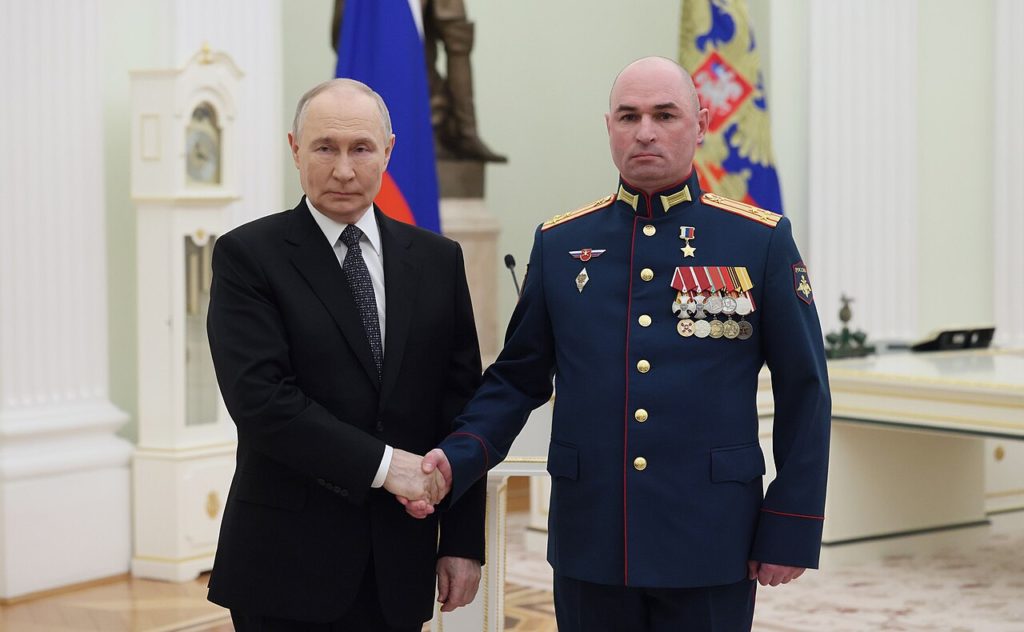
Vladimir Putin, Photo: Kremlin.ru (CC BY 4.0)

Police and Border Guard operation: 140 detained after checks

On 2 and 3 March 2026, Poland’s police and Border Guard carried out a nationwide operation to verify the legality of foreigners’ stay. Nearly 1,800 checks were conducted and more than 140 people were detained. Following the checks, 130 proceedings were launched to oblige individuals to return. In nearly 110 cases the proceedings concerned illegal stay, and in more than 20 cases authorities cited grounds related to a threat to state security. The operation involved more than 700 Border Guard officers from all units and a total of nearly 26,500 police officers.

In parallel, a nationwide operation targeting wanted persons resulted in 1,944 arrests of people sought on arrest warrants and orders to be brought in, including 147 foreign nationals. Among those 147 were 91 Ukrainian citizens, 14 Georgians, eight Belarusians, three Moldovans and two Russians, with 29 from other countries. Seven people were also detained on the basis of European Arrest Warrants and Interpol Red Notices, including a Brazilian citizen wanted for robbery and a Belarusian citizen wanted in an online fraud case. Police submitted 112 requests to the Border Guard for decisions ordering foreigners to return.

Drones hit the U.S. embassy compound in Riyadh

On 3 March 2026, drones struck the U.S. embassy compound in Riyadh. Saudi Arabia’s Ministry of Defence said two drones hit the facility. The strike caused a limited fire and material damage on the site. Available statements did not report any casualties.

The U.S. embassy told American citizens not to approach the embassy until further notice. The mission also cancelled citizen services appointments for that day, including emergency appointments. U.S. notices also warned of the risk of missile and drone attacks in the Dhahran area and urged people not to visit the consulate there.

Saudi Arabia’s cabinet said it would take all necessary measures to protect the country’s security, territory and population. The announcements did not specify the perpetrators of the attack or any follow-up action.

Trump threatens to halt all U.S. trade with Spain

On 3 March 2026, U.S. President Donald Trump said he would halt all trade with Spain. He made the remark at the White House during a meeting with German Chancellor Friedrich Merz. Trump linked the threat to Madrid’s decision not to allow the Rota and Morón bases to be used for missions connected to strikes on Iran.

The Spanish government said the bases are on Spanish territory under Spanish sovereignty and that they were not used for attacks on Iran. In the days after Spain’s decision, 15 U.S. aircraft departed from Rota and Morón. Trump also criticised Spain in the context of defence spending and NATO targets. Merz said publicly that Spain is part of the European Union and cannot be carved out from EU-wide trade arrangements.

On 4 March, Spanish Prime Minister Pedro Sánchez criticised Trump’s threats in a televised address. Spanish authorities did not announce any formal U.S. executive action to restrict trade.